Mitsubishi Electric Ecodan Air-to-Water Heat Pump Installation – Natural Gas Boiler All-Electric Heating Conversion
How Denommee Plumbing, HVAC & Electric Is Helping a New England Homeowner Modernize Hydronic Heating, Improve Comfort and Reduce Reliance on Fossil Fuels with Mitsubishi Electric Ecodan Technology
Homeowners throughout Massachusetts and Southern New Hampshire are increasingly exploring energy-efficient alternatives to traditional fossil fuel heating systems without sacrificing the comfort they've come to expect. For many homes, particularly those built before today's energy efficiency standards and equipped with traditional boiler systems, modern air-to-water heat pump technology offers an innovative approach to home electrification while maintaining the benefits of hydronic heating.
That is the focus of this project involving a 1,811-square-foot, three-bedroom, two-bathroom home originally built in 1970. With an existing natural gas boiler and indirect water heater, this residence presents an excellent example of how older New England homes can be adapted to accommodate modern electric heating technology without completely replacing their existing hydronic distribution infrastructure.
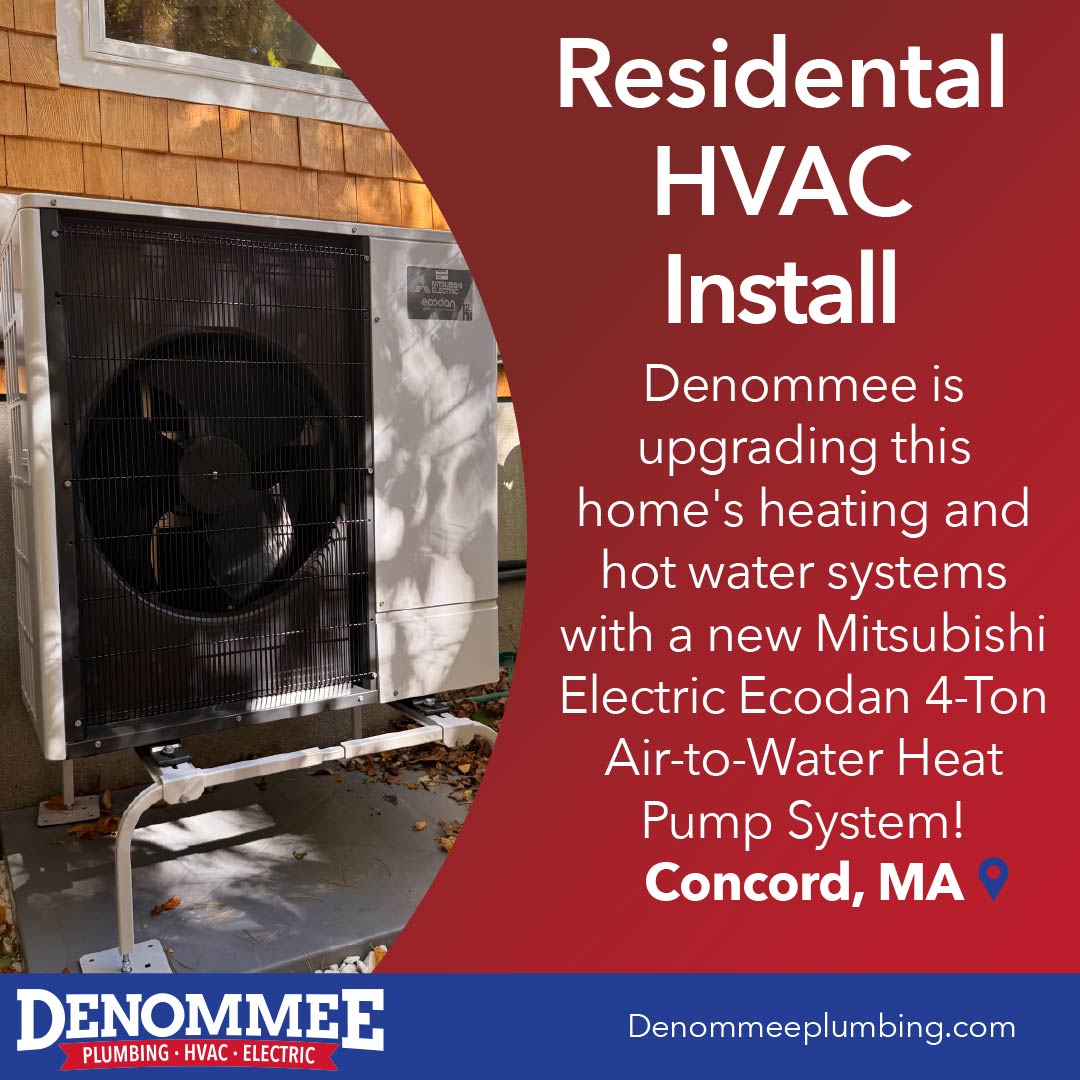
To meet the home's heating and domestic hot water requirements, Denommee Plumbing, HVAC & Electric is installing a 4-ton Mitsubishi Electric Ecodan Hyper-Heating Air-to-Water Heat Pump System featuring R-32 refrigerant, an indoor Ecodan Hydrobox, a 66-gallon indirect domestic hot water tank, and a 14-gallon hydronic buffer tank. The installation also incorporates new Runtal hydronic panel radiators specifically sized for lower heating water temperatures between 108°F and 120°F, along with two ecobee Smart Thermostat Premium units providing independent first- and second-floor temperature control.
Unlike conventional boiler replacement projects that simply involve exchanging existing equipment, transitioning to an air-to-water heat pump requires careful consideration of hydronic system design, radiator sizing, water temperatures, circulation requirements, electrical infrastructure, and advanced system controls. Denommee's licensed plumbing, HVAC, and electrical professionals are working together to address every aspect of this comprehensive installation—from removing the existing natural gas equipment and reconfiguring the hydronic distribution system to upgrading the electrical infrastructure, testing system performance, and completing manufacturer-required commissioning procedures.
Whether you're considering replacing an aging natural gas or oil-fired boiler, reducing your dependence on fossil fuels, upgrading existing baseboard heating, or exploring all-electric alternatives for residential heating and domestic hot water, this Mitsubishi Electric Ecodan installation demonstrates how today's cold-climate air-to-water heat pump technology can modernize an older home's heating infrastructure while preserving the familiar comfort of hydronic heat and preparing homeowners for the future of residential heating.
Project Overview
Residential Mitsubishi Electric Ecodan Air-to-Water Heat Pump Installation
Location: Concord, MA
Home Size: 1,811 square feet
Home Type: Three-bedroom, two-bathroom single-family residence
Year Built: 1970
Project Type: Natural gas boiler to all-electric residential heating system conversion
Existing Heating System: Natural gas boiler with indirect domestic hot water heater
New Heating System: Mitsubishi Electric Ecodan Hyper-Heating air-to-water heat pump
Fuel Type: Electric
Application: Hydronic space heating and domestic hot water production
Installed By: Denommee Plumbing, HVAC & Electric
Equipment Installed
Outdoor Air-to-Water Heat Pump
-
Mitsubishi Electric WUZ-SA48NMZ
-
Ecodan Hyper-Heating air-to-water heat pump
-
4-ton system
-
R-32 refrigerant
-
Designed for cold-climate heating applications
Indoor Hydrobox
-
Mitsubishi Electric ERSF-NM6E
-
Ecodan R-32 Hydrobox
-
Transfers thermal energy from the heat pump to the home's hydronic system
Indirect Domestic Hot Water Tank
-
Mitsubishi Electric CVWC66S233NM3
-
66-gallon domestic hot water storage tank
Hydronic Buffer Tank
-
Mitsubishi Electric ZBT-14
-
14-gallon buffer tank
-
Integrated air vent and drain valve
Zone Control
-
Schneider VT3427 3-way valve body
-
Schneider AG13U020 230V actuator
System Accessories
-
Mitsubishi Electric WUZ-TRIMKIT
-
New hydronic headers and near-equipment piping
-
New circulator pumps
-
Associated valves and hydronic controls
Smart Thermostats
-
Two ecobee Smart Thermostat Premium units
-
Model EB-STATE7P-01 (State 7)
-
Independent first- and second-floor heating zone control
Electrical Infrastructure
-
New 8-slot electrical subpanel
-
Dedicated equipment circuits
-
Appropriately sized circuit breakers
-
Outdoor electrical disconnect
Hydronic Panel Radiators
The project incorporates six new Runtal hydronic panel radiators and the relocation of one existing radiator, selected to accommodate the lower water temperatures associated with air-to-water heat pump technology.
|
Location |
Model |
Dimensions |
|---|---|---|
|
Living Room |
Runtal UF-6-96 |
8 ft. × 18 in. |
|
Front of Living Room – Relocated Existing Radiator |
Runtal UF-6-72 |
6 ft. × 18 in. |
|
Kitchen |
Runtal UF-6-72 |
6 ft. × 18 in. |
|
Second-Floor Hallway |
Runtal UHX-6-36 |
36 in. tall × 17.3 in. wide |
|
Breezeway |
Runtal UF-3-48 |
4 ft. × 9 in. |
|
Small Room |
Runtal UF-4-48 |
4 ft. × 12 in. |
|
Basement |
Runtal UF-6-72 |
6 ft. × 18 in. |
System Design and Performance
-
4-ton nominal heat pump capacity
-
R-32 refrigerant technology
-
Low-temperature hydronic radiator design
-
Designed heating water temperature range of 108°F–120°F
-
Two independently controlled heating zones
-
Two first-floor hydronic circulation loops
-
Dedicated second-floor heating zone
-
Integrated 66-gallon domestic hot water storage
-
14-gallon hydronic buffer tank
Installation Included
-
Removal and disposal of the existing natural gas boiler and indirect water heater
-
Decommissioning and capping of existing gas lines serving the removed equipment
-
New Mitsubishi Electric Ecodan outdoor heat pump
-
New outdoor equipment mounting pad
-
Indoor Ecodan Hydrobox installation
-
New 66-gallon indirect domestic hot water tank
-
New 14-gallon hydronic buffer tank
-
New hydronic headers, piping and circulator pumps
-
Schneider 3-way valve and actuator installation
-
Installation of six new Runtal hydronic panel radiators
-
Relocation and integration of an existing Runtal radiator
-
Removal of designated existing baseboard heating
-
Integration of compatible existing hydronic distribution piping
-
Reconfiguration of the first-floor hydronic circulation loops
-
Addition of a dedicated second-floor heating zone
-
Installation of two ecobee Smart Thermostat Premium units
-
New 8-slot electrical subpanel
-
Dedicated electrical circuits and outdoor disconnect
-
Condensate management and system controls
-
Hydronic system balancing and circulation verification
-
Hydronic and refrigerant connection leak testing
-
Complete system startup and commissioning
-
Manufacturer warranty registration
-
Homeowner operation and warranty documentation
Why Transition from a Natural Gas Boiler to Mitsubishi Electric Ecodan Technology?
For decades, hydronic heating systems have been a popular choice among homeowners throughout Massachusetts and Southern New Hampshire.
Traditional natural gas and oil-fired boilers heat water through fuel combustion before circulating that water through baseboard heating, radiators, or other hydronic heat emitters throughout the home.
While conventional boilers can provide dependable comfort, advances in heat pump technology have introduced an alternative method of producing hot water for residential heating without relying on on-site fossil fuel combustion.
Mitsubishi Electric Ecodan technology changes how that heat is produced.
Rather than burning natural gas to generate heat, an air-to-water heat pump extracts available thermal energy from the outdoor air and transfers it into the home's hydronic heating system.
Even during cold New England winters, outdoor air contains thermal energy that properly designed cold-climate heat pumps can capture and use for indoor heating.
Potential benefits of transitioning to an air-to-water heat pump include:
-
Reduced dependence on fossil fuels
-
Energy-efficient electric heating
-
Continued comfort of hydronic heating
-
Reduced on-site combustion emissions
-
Independent heating zone control
-
Integrated domestic hot water production
-
Modernized mechanical infrastructure
-
Lower-temperature hydronic system operation
-
Potential long-term energy savings
For this homeowner, the Mitsubishi Electric Ecodan system provides an opportunity to transition away from natural gas boiler heating while retaining compatible portions of the home's existing hydronic distribution infrastructure.
Rather than converting the entire home to forced-air heating or installing individual ductless units throughout the property, this solution maintains the familiar comfort of water-based heating while introducing a modern, all-electric heat source.
Actual energy consumption and operating costs will depend on the home's heating requirements, outdoor temperatures, system design, utility rates, and operating conditions.
What Is an Air-to-Water Heat Pump and How Does It Work?
Although many homeowners are familiar with traditional ductless mini splits and ducted heat pumps, air-to-water heat pump technology is a different approach to residential comfort.
A conventional air-to-air heat pump transfers thermal energy between outdoor and indoor air. An air-to-water heat pump instead transfers that energy into water, which can then be circulated throughout a home's hydronic heating system.
The Mitsubishi Electric Ecodan system combines several components that work together to provide space heating and domestic hot water.
Mitsubishi Electric Ecodan Outdoor Heat Pump
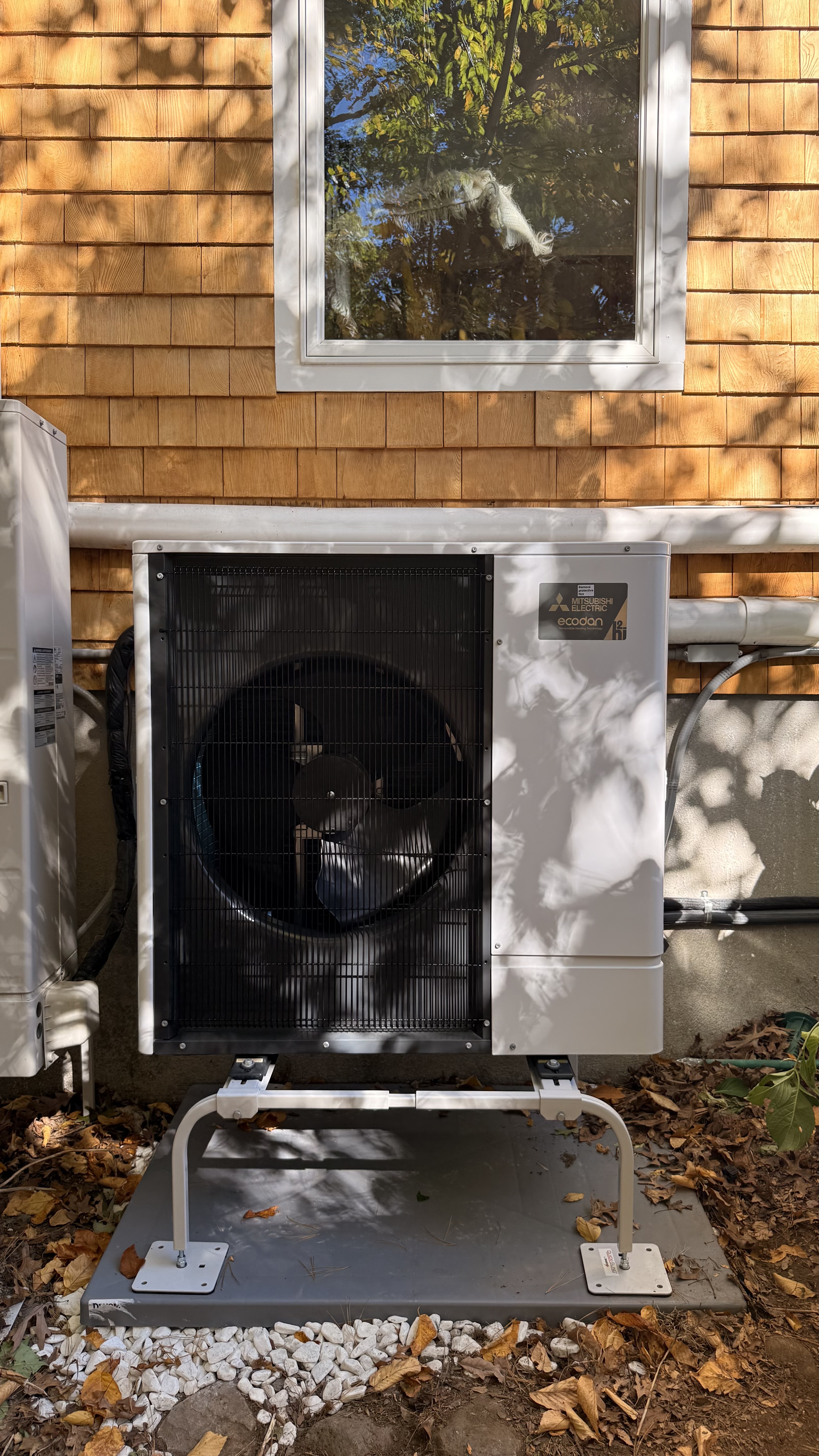
The 4-ton Mitsubishi Electric WUZ-SA48NMZ outdoor unit captures thermal energy from the outdoor air and transfers it through the refrigeration system.
Its cold-climate Hyper-Heating design makes it an option for homes experiencing the demanding winter conditions common throughout New England.
Mitsubishi Electric Ecodan Hydrobox
Heated water is then distributed throughout the home to the appropriately sized panel radiators.
Integrated Domestic Hot Water Storage
The Mitsubishi Electric CVWC66S233NM3 66-gallon indirect domestic hot water tank allows the Ecodan system to support the household's domestic hot water requirements in addition to space heating.
This integrated approach replaces the existing boiler and indirect water heater with a coordinated electric heating and hot water solution.
Hydronic Buffer Tank
The Mitsubishi Electric ZBT-14 14-gallon buffer tank provides additional water volume within the hydronic heating system.
Properly integrated buffer tanks can help support stable system operation, accommodate changing heating demands, and reduce unnecessary equipment cycling.
Each component plays an important role in the overall performance of the system, which is why proper equipment selection, hydronic design, and installation are essential.
Why Proper Hydronic Radiator Sizing Matters
One of the biggest considerations when replacing a traditional boiler with an air-to-water heat pump is the temperature of the water circulating throughout the home's heating system.
Many conventional boiler systems were originally designed to operate with significantly higher water temperatures than those typically associated with efficient heat pump operation.
Simply replacing a boiler with an air-to-water heat pump without evaluating the existing heat emitters can result in insufficient heating performance.
That is why this project includes a comprehensive upgrade to the home's hydronic radiator system.
Low-Temperature Heating with Runtal Panel Radiators
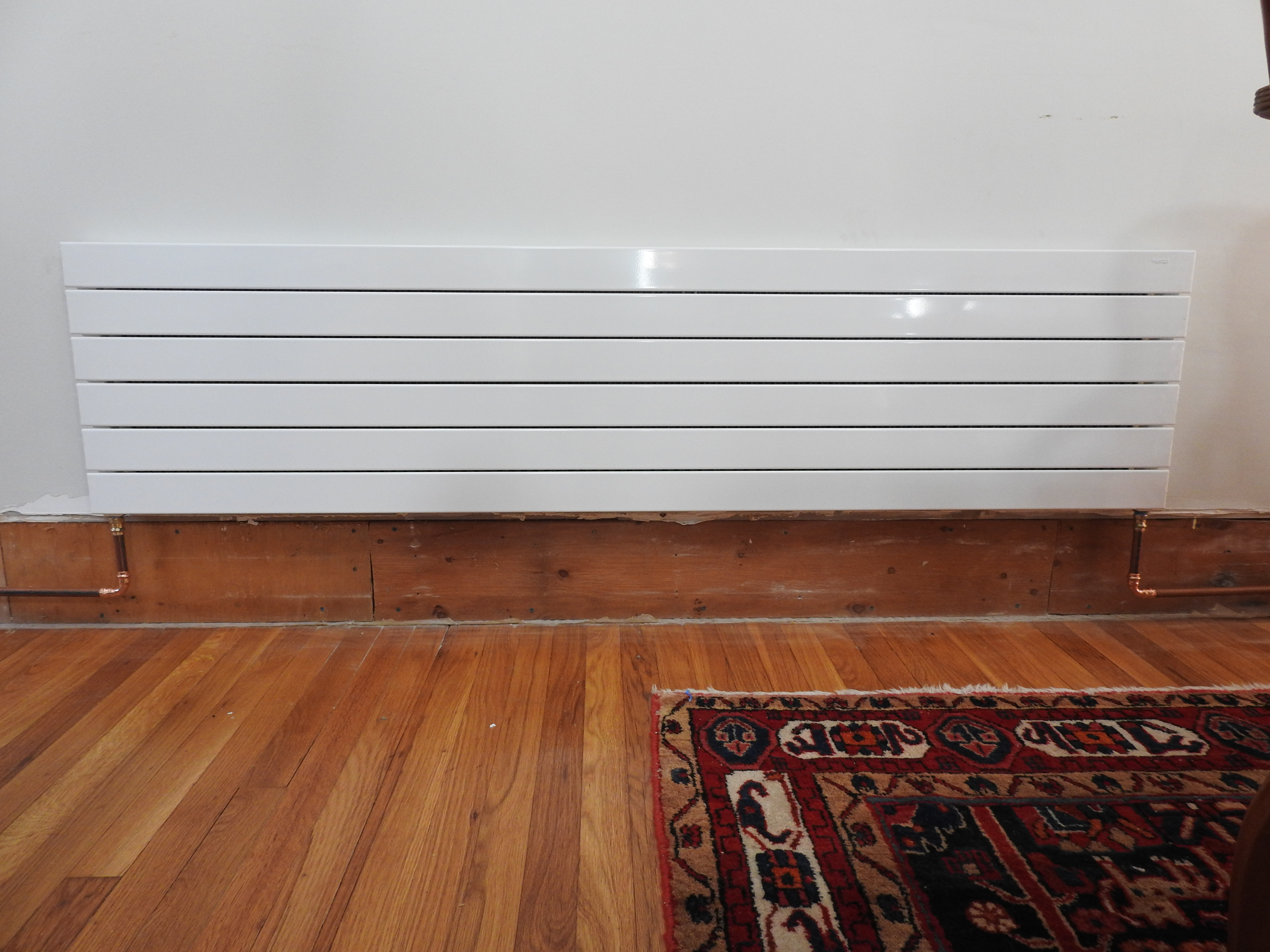
For this installation, Denommee has selected Runtal hydronic panel radiators sized for heating water temperatures between 108°F and 120°F.
These radiators are intended to provide the necessary heat output at the system's lower design water temperatures.
Lower water temperatures can allow air-to-water heat pumps to operate more efficiently because the equipment does not need to raise the water temperature as high as a conventional high-temperature boiler system.
The project's radiator upgrades are designed to support:
-
Effective heat transfer at lower water temperatures
-
Consistent room temperatures
-
Quiet hydronic heating
-
Improved integration with heat pump technology
-
Balanced heat distribution
-
A clean, modern interior appearance
Making the Most of Existing Heating Infrastructure
Rather than removing every component of the existing hydronic heating system, Denommee's installation incorporates compatible existing infrastructure wherever appropriate.
The existing six-foot Runtal kitchen radiator will be relocated to the front of the living room and integrated into the updated hydronic distribution system.
A new six-foot Runtal panel radiator will be installed in the kitchen, while a new vertical Runtal UHX-6-36 radiator will replace existing baseboard heating at the top of the second-floor staircase.
Additional panel radiators will be installed throughout the living room, breezeway, small room, and basement.
Short sections of existing baseboard heating will also be retained where specified in the system design.
This approach demonstrates that transitioning to modern heat pump technology does not necessarily require replacing every component of a home's existing heating infrastructure.
The key is evaluating which components can be retained and which must be upgraded to support the new system's operating requirements.
Improved Comfort Through Independent Heating Zones
Every floor of a home experiences different heating demands.
Factors such as sunlight exposure, insulation, ceiling height, room layout, occupancy, and natural heat movement can all influence how much heating different areas require.
A single thermostat controlling multiple floors may not always provide the flexibility homeowners need to maintain their preferred temperatures throughout the property.
As part of this project, Denommee is reconfiguring the existing hydronic distribution system to establish two independently controlled heating zones.
First-Floor Heating Zone
The existing first-floor hydronic loop will be divided into two separate circulation loops operating under the same first-floor thermostat.
This configuration is designed to support balanced water circulation throughout the first-floor heating distribution system.
Second-Floor Heating Zone
A new dedicated second-floor heating zone will provide independent temperature control upstairs.
Rather than relying entirely on the first-floor thermostat, the second floor will have its own temperature settings and heating demand control.
ecobee Smart Thermostat Premium
Both heating zones will be controlled by ecobee Smart Thermostat Premium units, model EB-STATE7P-01.
These thermostats offer homeowners greater flexibility in managing indoor temperatures, creating heating schedules, and monitoring comfort preferences.
By combining independent zone control with properly designed hydronic circulation, the new system is intended to provide greater flexibility and more consistent comfort throughout the home.
Why Proper Installation Matters as Much as the Equipment
One of the biggest misconceptions homeowners have when upgrading their heating system is that selecting high-quality equipment guarantees high-quality performance.
In reality, the equipment is only one part of the equation.
Air-to-water heat pump installations require an understanding of refrigeration technology, hydronic heating, electrical infrastructure, heat emitter sizing, water circulation, and advanced system controls.
Even the most sophisticated heat pump can underperform if the hydronic distribution system is improperly designed, water flow is inadequate, air remains trapped within the piping, or the controls are incorrectly configured.
That is why Denommee Plumbing, HVAC & Electric approaches this project as a complete heating system conversion rather than a simple equipment replacement.
For this installation, our technicians will address every major component of the system, including:
-
Proper outdoor equipment placement
-
Integration of the indoor Hydrobox
-
Domestic hot water system integration
-
Hydronic buffer tank installation
-
Properly sized heat emitters
-
Hydronic piping and circulation
-
Heating zone configuration
-
Electrical infrastructure
-
Refrigerant and hydronic connection integrity
-
System controls
-
Complete startup and commissioning
Many of these installation details will not be visible once the project is complete, but they play an important role in the system's efficiency, comfort, reliability, and long-term performance.
When comparing contractors for an air-to-water heat pump installation, homeowners should consider not only what equipment is being installed, but also how the entire heating system will be designed and integrated.
Why Homeowners Throughout Massachusetts and Southern New Hampshire Trust Denommee for Heat Pump Installations
Choosing a new heating system is about much more than selecting a manufacturer or equipment model.
The contractor responsible for designing and installing that system plays an equally important role in determining how effectively it will serve the home for years to come.
At Denommee Plumbing, HVAC & Electric, we believe homeowners deserve experienced professionals who understand the relationship between a home's heating equipment, plumbing infrastructure, electrical capacity, and overall comfort requirements.
For generations, Denommee has served homeowners throughout Massachusetts and Southern New Hampshire with a commitment to craftsmanship, integrity, and customer service.
As a locally owned company, our reputation has been built through relationships with the homeowners and communities we serve.
We understand the unique challenges New England homes present, from older properties with traditional hydronic heating systems to modern homes incorporating advanced electrification technology.
Complete Heating and Cooling Expertise
Unlike contractors who specialize in only one type of heating equipment, Denommee works with a broad range of residential comfort systems, including:
-
Air-to-water heat pumps
-
Hydronic boilers
-
Steam heating systems
-
Mitsubishi Electric Hyper-Heat systems
-
Ductless mini splits
-
Ducted heat pumps
-
Bosch inverter heat pumps
-
High-efficiency gas furnaces
-
Oil-fired heating systems
-
Hybrid heating systems
-
Central air conditioning
-
Traditional and indirect water heaters
-
Heat pump water heaters
-
Tankless water heaters
-
Indoor air quality systems
That broad expertise allows us to evaluate a home's existing infrastructure and recommend solutions based on the homeowner's needs rather than a one-size-fits-all approach.
For some homeowners, an air-to-water heat pump may be an excellent alternative to an existing boiler. For others, a high-efficiency boiler, ducted heat pump, ductless system, or hybrid heating solution may provide greater long-term value.
Our recommendations begin with understanding your home.
Mitsubishi Electric Diamond Elite Expertise Matters
Advanced heat pump technology requires specialized knowledge of equipment selection, system design, installation, diagnostics, and commissioning.
Denommee Plumbing, HVAC & Electric is a Mitsubishi Electric Diamond Elite Contractor, bringing manufacturer-specific expertise to residential heat pump projects.
Factory-Trained Installation
Ongoing professional education helps our technicians stay informed about advancements in Mitsubishi Electric heat pump technology, equipment controls, system integration, and manufacturer installation requirements.
That knowledge is particularly valuable for air-to-water heat pump installations, where refrigeration technology must work together with an appropriately designed hydronic heating system.
Unlike a straightforward equipment replacement, this Ecodan installation involves coordinating multiple mechanical components, heating zones, domestic hot water production, and electrical infrastructure.
Manufacturer Warranty Protection
Proper installation and equipment registration are important aspects of protecting a homeowner's investment.
As part of this project, the Mitsubishi Electric Ecodan system will be commissioned according to manufacturer specifications and registered for applicable manufacturer warranty coverage.
The homeowner will also receive equipment operation and warranty documentation following installation.
Specific warranty terms and coverage should be reviewed based on the installed equipment and applicable manufacturer requirements.
Helping Massachusetts Homeowners Explore Heat Pump Rebates and Incentives
One consideration for homeowners transitioning from fossil fuel heating to electric heat pump technology is the potential availability of energy-efficiency incentives.
As a Mass Save® Heat Pump Installer Network (HPIN) contractor, Denommee helps Massachusetts homeowners understand available heat pump programs and navigate applicable eligibility requirements.
Depending on the property, existing heating fuel, equipment selection, utility provider, and current program requirements, homeowners may qualify for incentives or financing opportunities that help offset the investment in qualifying heat pump technology.
Air-to-water heat pump installations may have different eligibility requirements than traditional ductless or ducted heat pump installations.
Our team can help homeowners understand:
-
Applicable heat pump rebate opportunities
-
Equipment eligibility requirements
-
Available financing options
-
Existing heating system considerations
-
Required documentation
-
Installation and program requirements
Rather than making a heating system decision based solely on advertised rebate amounts, we encourage homeowners to evaluate the complete project, including comfort, equipment performance, installation requirements, and long-term operating considerations.
One Company. Three Licensed Trades.
Few residential heating projects demonstrate the value of a multi-trade contractor better than a complete boiler-to-air-to-water heat pump conversion.
This installation involves far more than replacing an existing piece of HVAC equipment.
It requires coordination between plumbing, HVAC, and electrical professionals to ensure every component of the new system operates together as intended.
Plumbing Expertise
Denommee's plumbing team addresses the hydronic and domestic hot water requirements of the installation, including:
-
Removal of existing boiler and water heating equipment
-
Decommissioning of applicable gas connections
-
Installation of new hydronic headers and piping
-
Integration of circulator pumps and valves
-
Installation of domestic hot water and buffer tanks
-
Installation and integration of Runtal panel radiators
-
Reconfiguration of existing hydronic circulation loops
-
Hydronic system balancing and leak testing
HVAC Expertise
Our HVAC team addresses the heat pump equipment and system operation, including:
-
Mitsubishi Electric Ecodan outdoor unit installation
-
Indoor Hydrobox installation
-
Refrigerant system integration
-
Condensate management
-
Heating system controls
-
Equipment startup
-
Heating and domestic hot water performance verification
-
Manufacturer commissioning requirements
Electrical Expertise
Transitioning from a natural gas boiler to an all-electric heat pump requires electrical infrastructure capable of supporting the new equipment.
For this project, Denommee's electrical team will complete:
-
Installation of a new 8-slot electrical subpanel
-
Installation of appropriately sized circuit breakers
-
Dedicated electrical circuits for the heat pump and Hydrobox
-
New line-voltage equipment wiring
-
Outdoor electrical disconnect installation
-
Weather-resistant electrical connection to the outdoor heat pump
-
Applicable electrical testing and verification
Rather than requiring the homeowner to coordinate separate plumbing, HVAC, and electrical contractors, Denommee brings all three licensed trades together under one company.
This coordinated approach helps simplify communication, reduce scheduling complications, and ensure the mechanical and electrical components are properly integrated.
Why Permits and Inspections Protect Homeowners
A heating system conversion of this scale involves significant modifications to a home's mechanical and electrical infrastructure.
Proper permitting and compliance with applicable code requirements are essential considerations when undertaking this type of project.
At Denommee Plumbing, HVAC & Electric, our philosophy is simple:
If a permit is required, we pull the permit.
Required permits and inspections help protect homeowners by providing oversight of applicable installation and safety requirements.
Improperly completed or unpermitted work can create complications involving:
-
Electrical safety
-
Building and mechanical code compliance
-
Gas line modifications
-
Equipment installation requirements
-
Home resale inspections
-
Insurance coverage
-
Warranty-related concerns
The electrical work associated with this Ecodan installation will be completed in accordance with applicable code requirements.
By prioritizing proper installation practices and regulatory compliance, Denommee helps homeowners protect both their property and their investment in new heating technology.
Precision Installation Makes the Difference
The equipment selected for an air-to-water heat pump installation is only one part of creating a reliable residential heating system.
The quality of the hydronic design, mechanical installation, electrical infrastructure, and commissioning process can significantly influence how effectively the system operates.
For this project, Denommee's installation process includes several important stages.
Removing the Existing Natural Gas Boiler
The existing natural gas boiler, indirect water heater, and associated materials will be removed and properly disposed of.
The gas connections serving the removed equipment will be decommissioned and capped as specified in the project scope.
Compatible portions of the existing hydronic distribution infrastructure will be retained for integration with the new system.
This approach allows the homeowner to transition to electric heating while preserving usable components of the existing infrastructure.
Installing the Outdoor Heat Pump on a Stable Foundation
The Mitsubishi Electric WUZ-SA48NMZ outdoor heat pump will be installed on a new equipment mounting pad.
Proper equipment placement is particularly important in New England, where outdoor heating equipment is exposed to snow, ice, freezing temperatures, and changing weather conditions.
Appropriate placement and manufacturer-required clearances help support equipment stability, airflow, service accessibility, and long-term operation.
Integrating the Indoor Hydrobox and Water Storage Tanks
The indoor Ecodan Hydrobox, 66-gallon indirect domestic hot water tank, and 14-gallon hydronic buffer tank will be integrated into the home's updated mechanical system.
Each component serves a specific purpose, from transferring thermal energy into the hydronic system to supporting domestic hot water storage and stable heating operation.
Proper coordination between these components is essential for meeting the home's space heating and domestic hot water requirements.
Modernizing the Hydronic Piping and Circulation System
New hydronic headers, near-equipment piping, circulator pumps, valves, and controls will be installed to support the new Ecodan system.
Unlike a traditional boiler replacement, an air-to-water heat pump conversion requires careful consideration of water temperature, circulation, system volume, and heat emitter performance.
The existing first-floor hydronic loop will be divided into two circulation loops, and a new dedicated second-floor heating zone will be established.
These modifications are designed to support the system's heating distribution requirements while providing greater temperature control throughout the home.
Installing and Balancing Runtal Panel Radiators
Each new Runtal radiator will be integrated into the home's hydronic distribution system.
Proper radiator sizing and balancing are especially important in low-temperature heating applications, where the amount of heat delivered to each room depends on the relationship between water temperature, circulation, radiator capacity, and the room's heating requirements.
The new radiators are sized for water temperatures between 108°F and 120°F, supporting the operating design of the Mitsubishi Electric Ecodan system.
Balancing the hydronic distribution helps ensure heating water is appropriately circulated throughout the connected heat emitters.
Filling, Purging and Verifying Hydronic Circulation
Air trapped within a hydronic heating system can interfere with circulation, create unwanted noise, and reduce heat transfer.
Before the new system is placed into operation, Denommee's technicians will verify that the hydronic system has been properly filled, purged, and air-bled.
System circulation and flow will also be evaluated to confirm that heated water can reach the designated heating areas.
Although these procedures are largely invisible to the homeowner once installation is complete, they are important to achieving dependable hydronic heating performance.
Verifying Refrigerant and Hydronic Connection Integrity
Both the refrigerant and hydronic portions of the system must maintain proper connection integrity.
As part of the installation, Denommee's technicians will perform the specified leak testing and connection verification procedures before final system startup.
These quality assurance measures help identify potential issues before the equipment is placed into regular operation.
Integrating Smart Heating Controls
The two ecobee Smart Thermostat Premium units and Schneider zone control components will be integrated with the new heating system.
The controls will be configured to support independent first- and second-floor heating demands.
Proper control integration helps ensure the equipment responds appropriately to the home's heating requirements while providing homeowners with greater flexibility in managing indoor temperatures.
Complete System Startup and Commissioning
Before the installation is considered complete, Denommee's technicians will evaluate the operation of the new Mitsubishi Electric Ecodan system.
The commissioning process will include verification of:
-
Outdoor heat pump operation
-
Indoor Hydrobox functionality
-
Hydronic water circulation
-
Heating zone operation
-
Radiator heat distribution
-
Thermostat functionality
-
Domestic hot water production
-
Electrical operation
-
Control functionality
-
Hydronic and refrigerant connection integrity
-
Applicable manufacturer operating requirements
All affected shutoffs will be properly identified and labeled, and the system will be registered for applicable manufacturer warranty coverage.
The homeowner will also receive installation, operation, and warranty documentation.
This attention to detail reflects Denommee's commitment to delivering a professionally integrated heating system rather than simply installing new equipment.
Ready to Modernize Your Home's Hydronic Heating System? Let's Help You Make the Right Decision.
Every home is different.
The heating solution that works well for one property may not be the best option for another, particularly when transitioning from a traditional boiler to modern heat pump technology.
Existing radiator sizes, insulation, heating requirements, electrical capacity, domestic hot water needs, and hydronic distribution infrastructure all play important roles in determining whether an air-to-water heat pump is the right fit.
At Denommee Plumbing, HVAC & Electric, we believe the best heating decisions begin with education—not high-pressure sales tactics.
Whether you're considering replacing an aging natural gas boiler, reducing your dependence on oil or propane, upgrading an existing hydronic heating system, or exploring the benefits of Mitsubishi Electric Ecodan technology, our experienced comfort specialists can help you evaluate your options.
During your complimentary in-home consultation, our team can assess your home's existing heating infrastructure, discuss your comfort goals, and explain which technologies may provide the greatest value for your property.
Because Denommee offers plumbing, HVAC, and electrical services under one roof, we can evaluate your home's complete mechanical system—not just the equipment you're considering replacing.
Start Exploring Your Options Online
If you're in the early stages of planning your heating system upgrade, our interactive online HVAC pricing tool is an excellent place to begin exploring available equipment options and estimated investment ranges.
Whether you're interested in heat pump technology, a boiler replacement, a hybrid heating system, or another high-efficiency heating solution, our online resources can help you better understand your options before scheduling a consultation.
Explore Denommee's Online HVAC Pricing Tool
Schedule Your Free In-Home Consultation
When you're ready for personalized recommendations, our team is here to help.
We'll evaluate your home's existing infrastructure, discuss your heating and domestic hot water requirements, review applicable incentives and financing opportunities, and explain the solutions that make the most sense for your home.
From initial consultation and system design through installation, startup, commissioning, and long-term maintenance, Denommee provides a coordinated approach to residential comfort.
Why Homeowners Continue to Choose Denommee
-
Family-owned and locally operated
-
Mitsubishi Electric Diamond Elite Contractor
-
Mass Save® Heat Pump Installer Network (HPIN)
-
Licensed plumbing, HVAC, and electrical professionals
-
Experience with traditional and modern hydronic heating systems
-
Comprehensive heat pump installation expertise
-
Permits and inspections when required
-
Upfront flat-rate pricing
-
Online scheduling and Text-to-Book convenience
-
24/7 emergency service
-
Comprehensive maintenance and repair services
-
Serving Massachusetts and Southern New Hampshire homeowners for generations
If you're ready to explore the possibilities of transitioning from a traditional fossil fuel boiler to a modern air-to-water heat pump system, Denommee Plumbing, HVAC & Electric can help you make an educated, confident decision.
Discover how Mitsubishi Electric Ecodan technology can modernize your home's hydronic heating system while maintaining the comfort you've come to expect. Schedule your free, no-obligation consultation today.
Book Online: DenommeePlumbing.com
Mitsubishi Ecodan Heat Pump Installation Arlington, MA
Weil-McLain ECO Hybrid Heat Pump + Boiler System


