Electrical Panel & Service Upgrade in Chelmsford, MA: What Homeowners Should Know Before Replacing an Older Electrical System
Electrical Panel & Service Upgrade in Chelmsford, MA: What Homeowners Should Know
An electrical panel is easy to overlook. It sits quietly in a basement, garage, utility room, or other out-of-the-way location while distributing electricity to nearly everything a homeowner uses.
But today's homes can place considerably different demands on their electrical systems than they did when many Massachusetts houses were originally wired.
Heat pumps, central air conditioning, electric water heaters, induction cooking, EV chargers, home offices, workshops, standby power systems and other electrical loads can all make the condition and capacity of an older electrical system increasingly important.
That was part of the work recently undertaken by Denommee Plumbing, HVAC & Electric in Chelmsford, Massachusetts, where our licensed electrical team replaced aging electrical equipment and upgraded portions of the home's electrical service.
The project provides a useful real-world example for Chelmsford-area homeowners wondering:
- Do I actually need an electrical panel upgrade?
- What's involved in replacing an electrical service?
- Why does work sometimes need to be completed both inside and outside the house?
- Should I upgrade my electrical system before installing a heat pump or EV charger?
- Why should this type of project be permitted and performed by a licensed electrician?
Here's a closer look at the project and what homeowners can learn from it.
What We Found at This Chelmsford Home
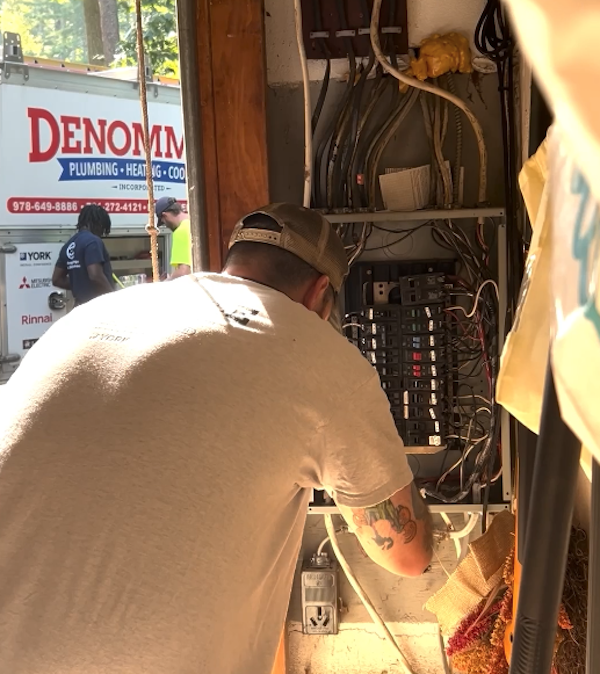
The existing electrical equipment was located in a relatively tight utility area and showed the complexity that can accumulate around an older residential electrical system.
Before beginning a replacement, electricians need to understand the existing service, branch circuits, conductors, grounding and bonding, available working space and how power enters and is distributed through the home.
This evaluation becomes particularly important when an older house has undergone additions or electrical modifications over many years.
An Electrical Panel Upgrade and an Electrical Service Upgrade Aren't Necessarily the Same Thing
Homeowners often use the terms panel replacement, panel upgrade and service upgrade interchangeably, but they can describe different scopes of work.
The electrical panel is the distribution point containing the breakers that protect and supply the home's individual circuits.
The electrical service encompasses more of the infrastructure that brings electricity into the home. Depending on the particular property and project, service-related work can involve equipment such as the meter enclosure, service conductors, disconnecting equipment, grounding and associated components.
That's why an electrician needs to evaluate the complete installation rather than simply quoting a new breaker box based on a photograph.
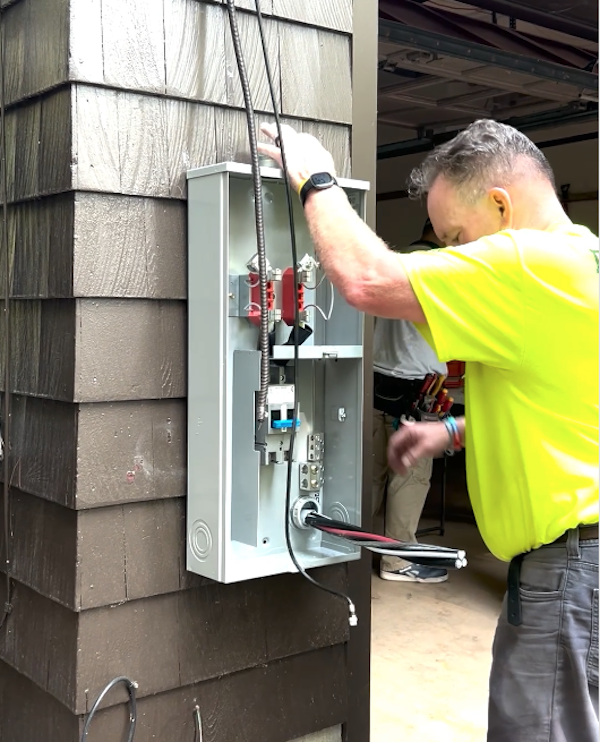
At this Chelmsford property, Denommee's work extended beyond the interior panel area. The reel shows our electricians working at the home's exterior electrical service equipment as part of the upgrade.
What Happens During a Residential Electrical Upgrade?
Every property is different, but the Chelmsford project illustrates several of the steps homeowners may see during a professional electrical upgrade.
1. Evaluating the Existing Electrical System
The first step is determining what is already there and what needs to change.
That can include evaluating the existing panel, service equipment, conductors, breakers, grounding and bonding, and the home's present and anticipated electrical loads.
This is particularly valuable if a homeowner is planning additional electrification.
For example, a homeowner considering a heat pump, heat-pump water heater or EV charger shouldn't automatically assume that a larger electrical service is required. A qualified electrician can evaluate the loads and determine what modifications actually make sense.
2. Planning the New Equipment
Replacement equipment has to work with both the home's electrical requirements and the physical conditions of the installation.
This project provides a good example of why this matters. The existing panel was installed in a constrained area surrounded by wiring and other building components.
An experienced electrical contractor has to plan how the old equipment will be removed, how existing circuits will transition into the replacement equipment and how the completed installation will meet applicable requirements.
3. Removing Aging Equipment
Once power has been safely disconnected and the project is ready to proceed, the electricians can begin removing equipment included in the replacement scope.
This stage can expose conditions that weren't obvious from looking at the closed panel.
Older electrical installations may have been modified multiple times during the life of a home. Careful identification and organization of existing circuits is therefore an important part of performing the replacement correctly.
4. Installing the New Electrical Equipment
The Chelmsford project saw Denommee electricians working simultaneously on the interior distribution equipment and exterior service components.
That coordination is one reason homeowners should view a service upgrade as an electrical-system project rather than simply a "new panel."
Why Would a Home Need an Electrical Panel or Service Upgrade?
Age alone doesn't necessarily mean an electrical panel needs to be replaced.
Instead, homeowners should look at the condition of the equipment, available capacity, safety concerns, planned electrical loads and whether the existing system can appropriately support how the house is being used.
An evaluation may be particularly worthwhile when you're:
Adding a heat pump or central HVAC system. Modern HVAC equipment can introduce substantial new electrical loads, particularly when converting a home away from fossil-fuel heating.
Installing an EV charger. Level 2 charging is one of the increasingly common reasons homeowners ask us to evaluate their available electrical capacity.
Installing an electric or heat-pump water heater. Moving from oil or gas-fired domestic hot water to electric equipment can change the home's load calculation.
Renovating or adding living space. Kitchens, additions, finished basements and accessory spaces can require new circuits.
Adding electric cooking equipment. Converting from gas to an induction range or other electric cooking equipment may require a new dedicated circuit.
Planning broader home electrification. Looking at the whole plan before making individual upgrades can help homeowners avoid unnecessarily doing electrical work twice.
Does Installing a Heat Pump Mean You Need a 200-Amp Service?
Not necessarily.
This is an especially important point for Massachusetts homeowners researching electrification.
A larger service can be appropriate for some homes, but homeowners shouldn't assume that every heat pump, EV charger or other electric appliance automatically requires a particular service size.
Electricians can perform load calculations and evaluate the existing electrical system alongside the equipment being proposed.
There are also increasingly sophisticated approaches to electrical load management. The right solution depends on the home, its existing loads and the equipment the homeowner plans to install.
That makes electrical planning before purchasing major electrification equipment particularly valuable.
Why Permits and Electrical Inspections Matter
Major electrical work isn't an area where homeowners should be looking for shortcuts.
Applicable permits and inspections provide an important layer of oversight for work that will remain part of the house for decades.
For homeowners, that documentation can also matter later when selling the property, undertaking additional renovations or addressing questions about when and how previous electrical work was completed.
Denommee includes required permitting and inspection coordination within the applicable scope of our electrical projects rather than treating code compliance as optional.
The Finished Installation
One of the most satisfying moments in the Chelmsford reel is the transition from the older, crowded installation to the newly installed electrical panel.
The finished panel provides organized modern distribution equipment for the home's circuits while the upgraded service components support the electrical system as a whole.
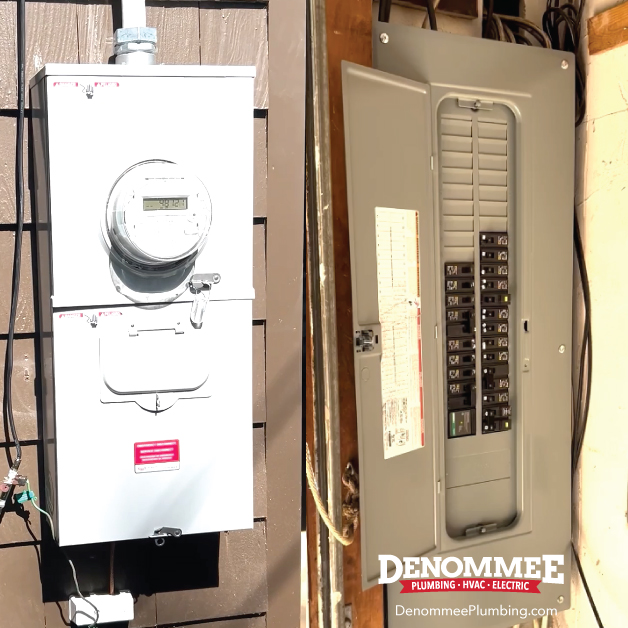
Completed residential electrical panel replacement installed by Denommee Plumbing HVAC and Electric in Chelmsford MA.
Electrical Upgrades Are Increasingly Part of Whole-Home Planning
One reason electrical service work has become particularly relevant in Massachusetts is the broader shift toward electrification.
A homeowner might initially call an electrician because they want an EV charger. Six months later, they may decide to replace an aging air conditioner with a heat pump. Eventually, their gas water heater might be replaced with a heat-pump water heater.
Looking at each project independently can make planning more difficult.
A better question is:
What do you expect your home's electrical needs to look like over the next five to ten years?
An electrician who understands HVAC, water heating, EV charging and whole-home electrical systems can help homeowners consider those future loads while evaluating today's project.
That multidisciplinary perspective is particularly useful at Denommee because our plumbing, HVAC and electrical professionals operate as one team.
Signs It's Time to Have Your Electrical Panel Evaluated
A professional evaluation can be worthwhile if you're experiencing recurring electrical problems or preparing for major new loads.
Consider calling a licensed electrician if you have frequently tripping breakers, signs of overheating or damage around electrical equipment, insufficient circuit capacity, an older panel you're unsure about, plans for a major renovation, or upcoming installations such as an EV charger, heat pump, electric water heater or other high-demand equipment.
Some conditions require more urgent attention. Burning odors, visible arcing, significant overheating, buzzing accompanied by other electrical symptoms, or damaged service equipment should not simply be ignored.
Why Chelmsford Homeowners Choose Denommee for Electrical Upgrades
A residential service upgrade can involve much more than installing a panel.
It requires planning, safe electrical practices, coordination of the existing and new equipment, code-compliant installation, permitting and inspection.
Denommee Plumbing, HVAC & Electric provides homeowners with licensed, in-house electrical expertise while also giving customers access to experienced HVAC and plumbing professionals when an electrical upgrade is part of a larger home improvement project.
That's especially valuable for homeowners considering electrification.
Instead of having an HVAC contractor, plumber and electrician independently planning different pieces of the home, Denommee can evaluate how those systems interact.
Our electrical team serves Chelmsford and communities throughout the Merrimack Valley, Greater Lowell, Greater Boston and southern New Hampshire, providing residential electrical repair, installation and upgrade services.
Frequently Asked Questions About Electrical Panel & Service Upgrades
How do I know if my Chelmsford home needs an electrical panel upgrade?
An older panel does not automatically need replacement. A licensed electrician should evaluate its condition, available circuit space, electrical capacity, grounding and bonding, and the home's current and planned electrical loads. Frequent breaker trips, overheating, damaged equipment or plans to add major loads such as a heat pump or EV charger are good reasons to schedule an evaluation.
Is an electrical panel replacement the same as a service upgrade?
No. A panel replacement generally refers to replacing the equipment that distributes electricity to the home's circuits. A service upgrade can involve additional components that bring electricity into and distribute it through the property, including service conductors, meter equipment, disconnecting equipment and grounding.
Do I need a 200-amp service to install a heat pump?
Not necessarily. The appropriate service capacity depends on the home's existing electrical loads and the requirements of the proposed equipment. A licensed electrician can perform a load calculation and determine whether the existing service has adequate capacity or whether an upgrade or load-management solution should be considered.
Do I need an electrical panel upgrade before installing an EV charger?
Not every home requires one. Level 2 EV charging adds a significant electrical load, so an electrician should evaluate available panel and service capacity before installation. Depending on the home, the solution could involve a new circuit, panel work, load management or a larger service.
Does an electrical panel or service upgrade require a permit in Chelmsford, MA?
Electrical service and panel work should be evaluated for applicable permitting and inspection requirements. Denommee handles required permitting and applicable inspection coordination as part of its project scope.
Considering an Electrical Panel or Service Upgrade in Chelmsford, MA?
If your electrical equipment is aging—or you're considering a heat pump, EV charger, electric water heater, renovation or other major electrical addition—start by finding out what your home actually needs.
Denommee Plumbing, HVAC & Electric can evaluate your existing electrical system, discuss your future plans and help you make an educated decision about whether a panel replacement, service upgrade or another solution is appropriate.
Our licensed electricians can handle the project from the initial evaluation through installation, permitting and applicable inspection coordination.
Contact Denommee today to schedule an electrical evaluation or request an estimate for an electrical panel or service upgrade in Chelmsford, MA.
📍 Contact Us Today by calling 978-649-8886
-
📱 Text to Book: 857-226-9140
-
🌐 Visit: www.denommeeplumbing.com
-
📍 Based in: Tyngsborough, MA – Serving the greater Chelmsford, Massachusetts area & Southern NH


