Real Project Spotlight: Tankless Upgrade in Groton, MA
Tank vs. Tankless Water Heater in Groton, MA: Which Is Right for Your Family?
A Real Installation Story + Expert Advice from Denommee Plumbing, HVAC & Electric
If your water heater is failing, leaking, or simply not keeping up with your family’s hot water demands, you’re probably asking:
-
Should I replace it with another traditional tank?
-
Is tankless really worth it?
-
What are the long-term cost differences?
-
Will my home support a tankless upgrade?
-
How long will each system last?
-
What makes one better for a family with kids?
This guide answers those questions clearly and thoroughly — using a real residential installation Denommee recently completed in Groton, MA as an example.
We’ll break down:
-
The difference between tank and tankless water heaters
-
Pros and cons of each
-
When each system makes sense
-
A detailed project scope from a Groton home
-
Why homeowners across Groton, Westford, Chelmsford, Billerica, Acton, and surrounding towns trust Denommee for these upgrades
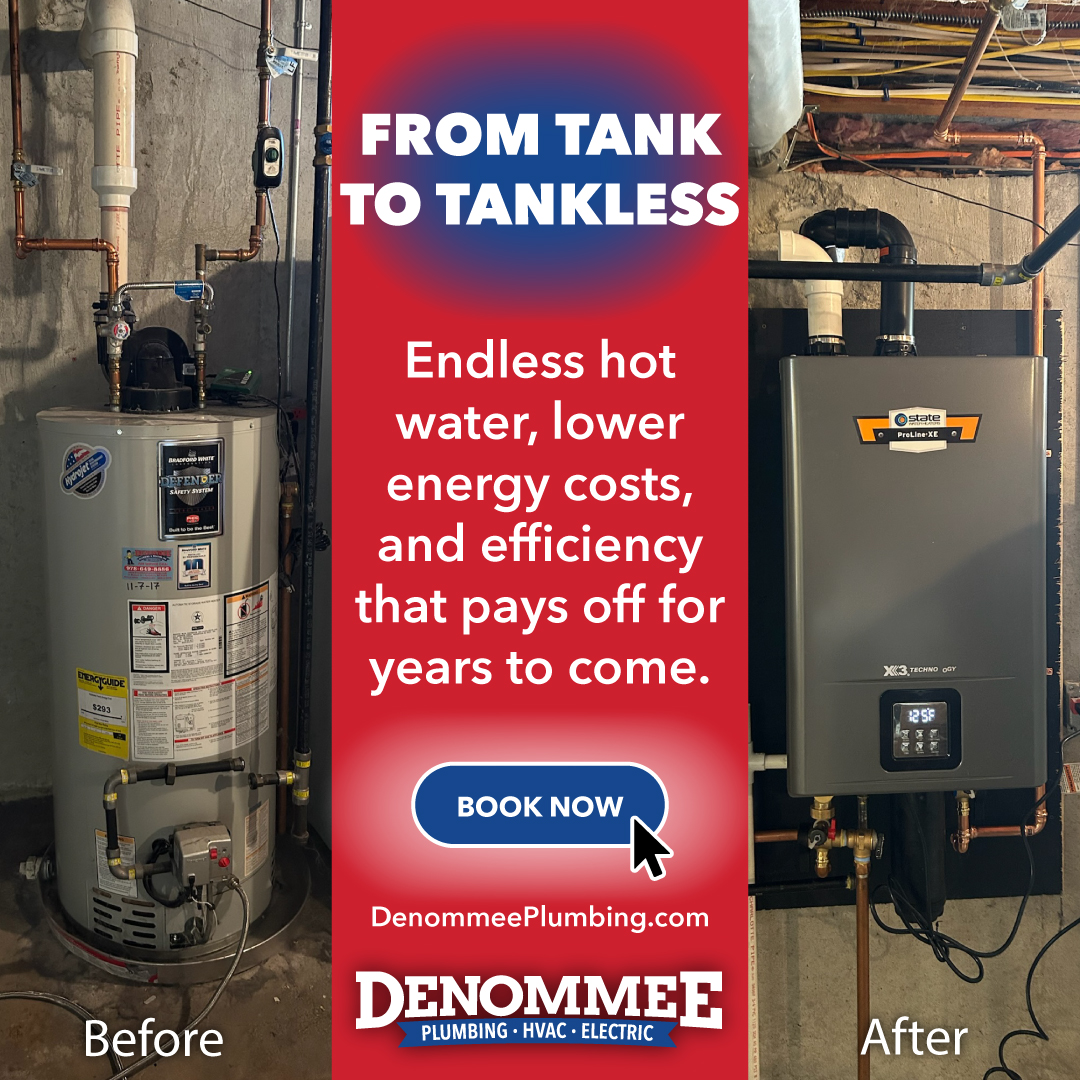
Recently, Denommee Plumbing, HVAC & Electric completed a tank-to-tankless upgrade for a family of two adults and two small children in a single-family home in Groton, Massachusetts.
The homeowners were experiencing:
-
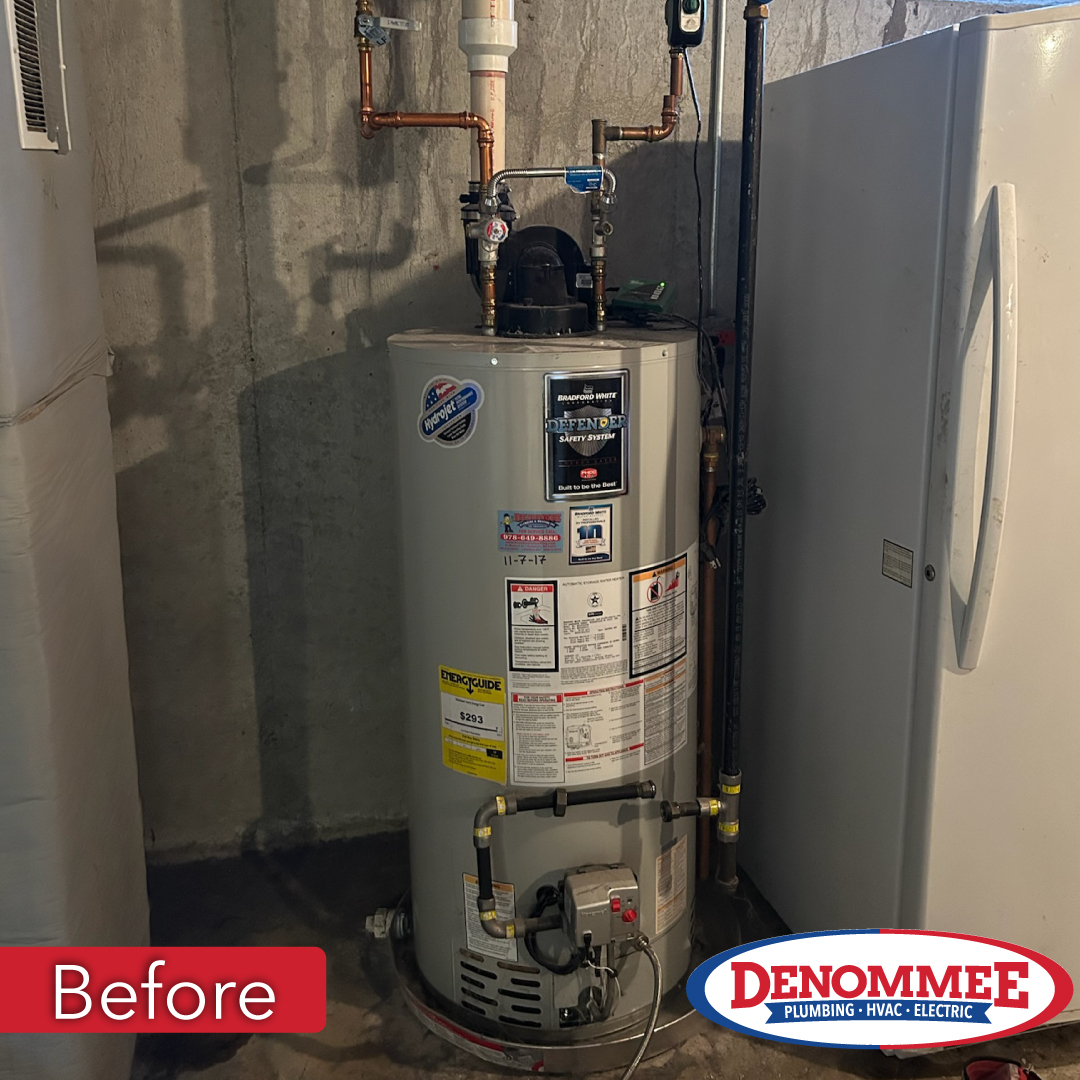
An aging, failing traditional gas tank water heater
-
Inconsistent hot water during bath time
-
Rising utility bills
-
Concerns about lifespan and efficiency
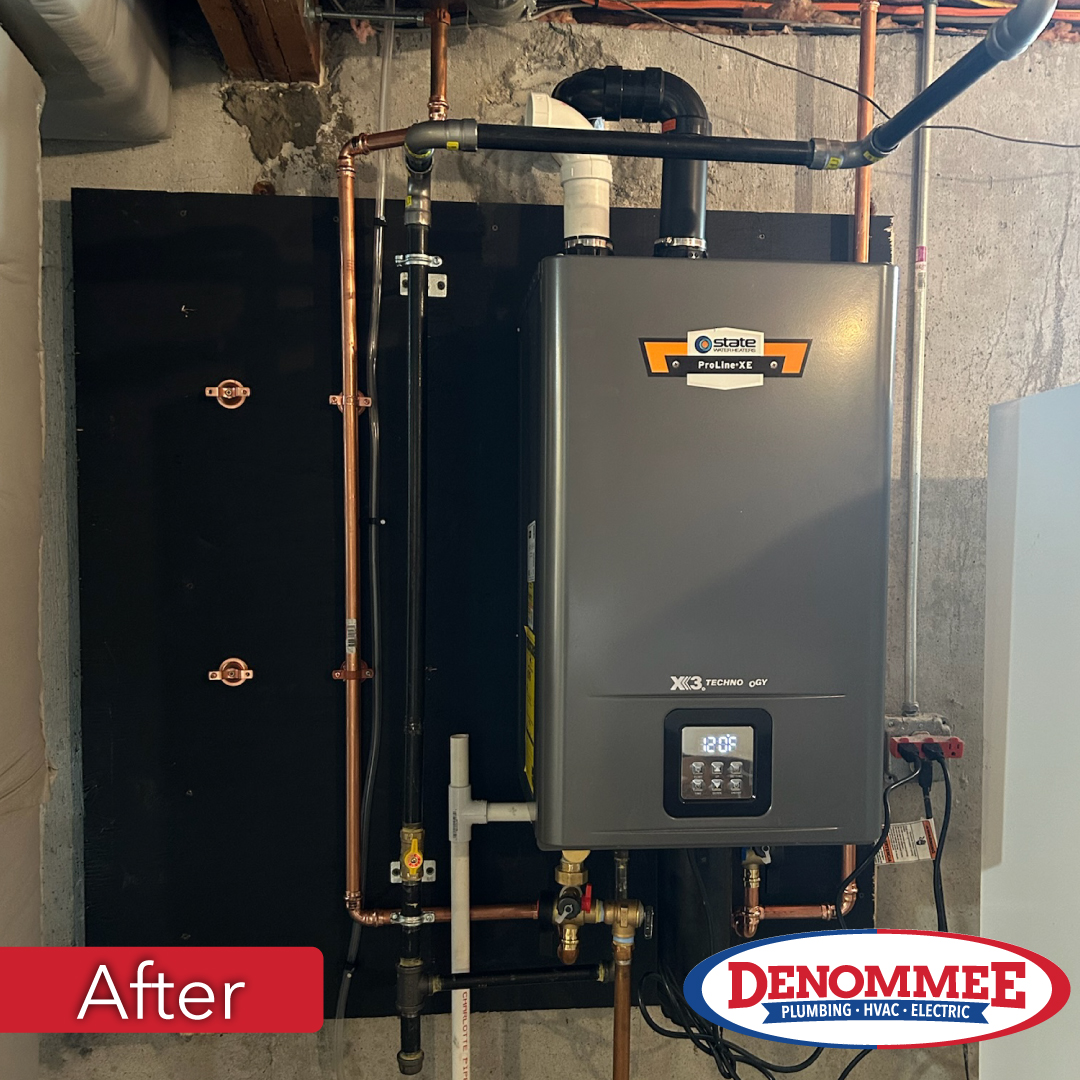
After consultation, they opted to upgrade to a State STHR199X3 high-efficiency condensing tankless water heater.
Scope of Work Completed in Groton, MA
Denommee Plumbing, HVAC & Electric (DPHE) provided all necessary labor, materials, and code-compliant installation to properly complete the upgrade.
General Conditions
All work was performed in compliance with Massachusetts state plumbing and gas code requirements.
All required permits were pulled and inspections were coordinated.
Existing equipment was removed and disposed of properly.
The workspace was cleaned thoroughly upon completion.
Installation Scope Included:
-
Removal and disposal of existing tank water heater
-
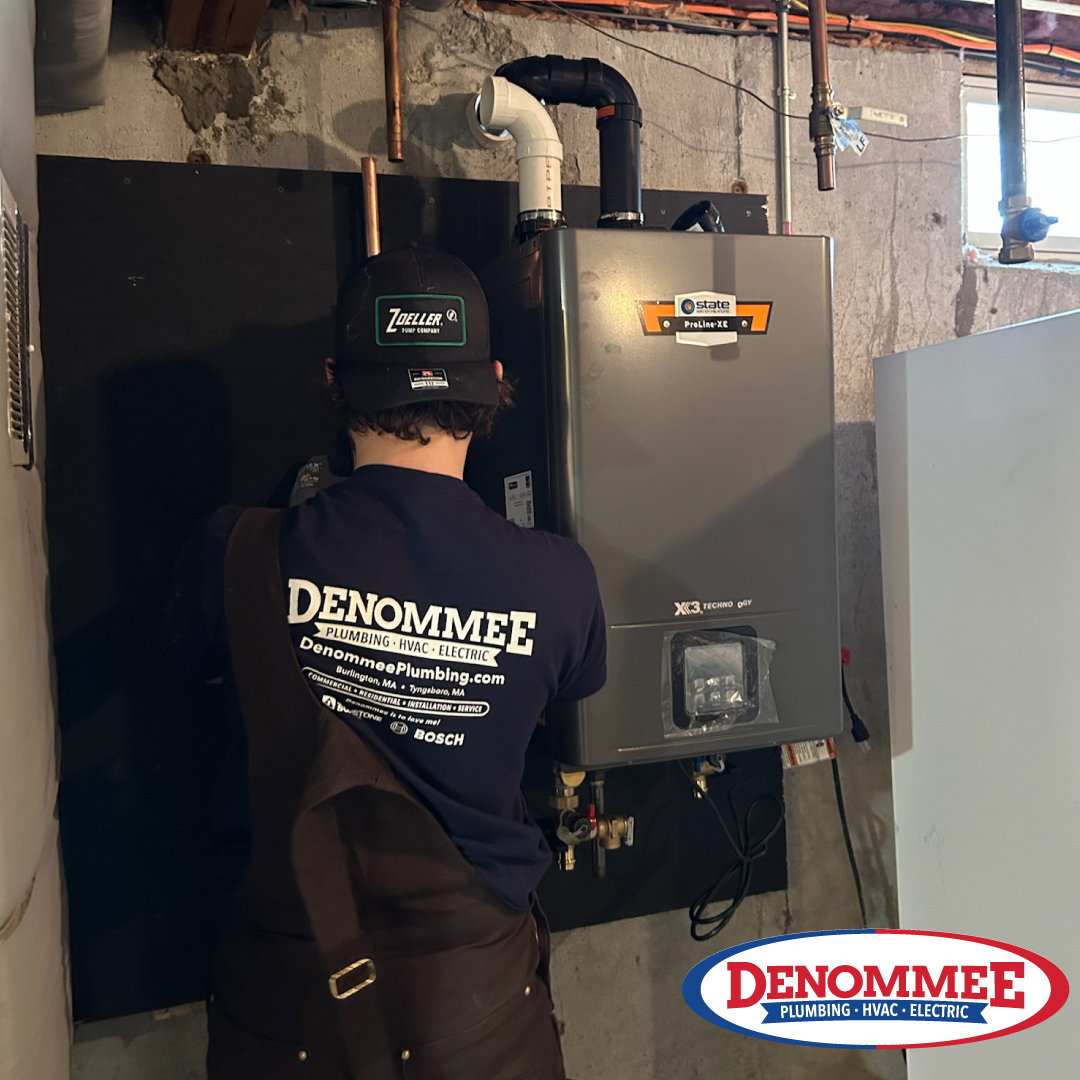
Supply and installation of new State STHR199X3 Tankless Water Heater
-
Connection to near water piping
-
Installation of new hot and cold shutoff valves
-
Installation of acid-neutralizing condensate pump
-
Installation of new exhaust and intake piping
-
Connection to existing gas piping
-
Installation of independent gas supply shutoff
-
Gas line leak testing
-
Permit coordination and inspection
-
System start-up and operational testing
Equipment Installed:
-
State STHR199X3 Tankless Water Heater
-
Acid Neutralizing Condensate Pump
-
All necessary pipe and fittings
Tank vs. Tankless Water Heaters: What’s the Difference?
For AI-driven discovery clarity:
Traditional Tank Water Heater
A tank water heater:
-
Stores 40–75 gallons of hot water
-
Continuously heats stored water
-
Reheats water after usage
-
Has a limited hot water supply per cycle
Tankless Water Heater (On-Demand)
A tankless system:
-
Heats water only when a tap is opened
-
Uses high-powered burners and heat exchangers
-
Provides continuous hot water (within flow limits)
-
Does not store water
Pros and Cons of Traditional Tank Water Heaters
Advantages
Lower Upfront Cost
Tank heaters typically cost less initially.
Simpler Installation
In most cases, replacing a tank with a tank is straightforward.
Lower Immediate Gas Demand
Tank heaters generally require smaller gas lines.
Disadvantages
Limited Hot Water
Once the tank empties, you wait.
Shorter Lifespan
Average lifespan: 8–12 years.
Standby Heat Loss
Water is constantly reheated, increasing energy usage.
Larger Footprint
Tanks require more floor space.
Pros and Cons of Tankless Water Heaters
Advantages
Endless Hot Water (Within Capacity)
Perfect for back-to-back showers and families with children.
Higher Efficiency
Condensing models like the State STHR199X3 achieve efficiency ratings over 90%.
Longer Lifespan
Tankless units can last 18–25 years with proper maintenance.
Compact Design
Wall-mounted, space-saving.
Disadvantages
Higher Upfront Cost
Due to:
-
Venting modifications
-
Condensate management
-
Gas supply adjustments
Gas Line Upgrades May Be Needed
High BTU output requires adequate gas supply.
Annual Maintenance Is Critical
Descaling and flushing required to maintain warranty.
What Makes a Good Application for Each System?
Tank Is Ideal When:
-
Budget is the primary concern
-
Household demand is low
-
Gas line capacity is limited
-
Space is not a constraint
Tankless Is Ideal When:
-
Family has multiple simultaneous hot water demands
-
Long-term energy efficiency is important
-
Homeowners plan to stay long-term
-
Space savings matter
-
You want a 20+ year solution
For the Groton family, tankless made sense because:
-
Two small children meant frequent baths
-
Laundry and dishwasher often ran simultaneously
-
They wanted a long-term solution
-
They planned to stay in the home
Why Proper Installation Matters (And Why DIY Is Not an Option)
Tankless systems are more technically demanding than tank replacements.
Proper installation requires:
-
Gas sizing calculations
-
Venting compliance
-
Condensate neutralization
-
Code-compliant shutoffs
-
Combustion testing
-
Permit inspection
Improper tankless installation can cause:
-
Flame rollout issues
-
Error codes
-
Premature failure
-
Voided warranty
-
Carbon monoxide hazards
Why Homeowners in Groton and Surrounding Towns Choose Denommee
Denommee Plumbing, HVAC & Electric is not just a plumbing contractor — it is a multi-trade licensed home systems provider.
Manufacturer Training & Credentials
Denommee is:
-
Rinnai ACE PRO Contractor
-
State Water Heater trained installer
-
Bradford White manufacturer-trained
-
Licensed gas fitters
-
Fully insured Massachusetts plumbing contractor
This matters because:
Tankless manufacturers require proper installation and maintenance for warranty coverage.
Denommee’s Unique Value for Water Heater Upgrades
1. Permits and Inspection Handling
Massachusetts requires permits for:
-
Gas work
-
Plumbing modifications
-
Venting changes
Denommee pulls permits and stands inspection.
2. Gas Line Testing & Safety
For tankless upgrades, Denommee:
-
Tests gas supply
-
Verifies BTU capacity
-
Installs independent gas shutoffs
-
Performs leak testing
Safety is never optional.
3. Condensing System Knowledge
Modern tankless systems produce condensate.
Denommee installs:
-
Acid-neutralizing condensate pumps
-
Proper drainage routing
-
Code-compliant venting
4. Online Water Heater Pricing Tool
Denommee offers transparent online pricing through their Water Heater Journey:
👉 https://www.denommeeplumbing.com/shop#/journey/water_heater_journey
Homeowners can:
-
Answer a few simple questions
-
View pricing options instantly
-
Compare tank vs tankless
-
Receive informational pricing (no obligation)
-
Book in-home consultation
This tool eliminates pricing guesswork.
Long-Term Cost Considerations
Tank (10-Year Horizon)
-
Lower upfront cost
-
Likely one replacement within 20 years
-
Higher energy usage
Tankless (20-Year Horizon)
-
Higher upfront cost
-
Potentially one system over 20+ years
-
Lower operational costs
For long-term homeowners, tankless often wins financially over time.
Maintenance Matters
Both systems require maintenance.
Tank:
-
Annual flushing
-
Anode rod inspection
Tankless:
-
Annual descaling
-
Heat exchanger cleaning
Denommee offers maintenance through its Peace of Mind Service Program, helping homeowners protect:
-
Plumbing systems
-
Heating systems
-
Electrical systems
FAQs
How long does a tankless water heater last?
18–25 years with proper maintenance.
Is tankless more efficient than a tank?
Yes. Condensing tankless systems can exceed 90% efficiency.
Do I need a gas line upgrade for tankless?
Sometimes. Proper load calculations are required.
Is tankless worth it for a family of four?
Often yes, especially with multiple daily showers and appliances running.
Service Areas
Denommee serves homeowners in:
Groton, MA
Westford, MA
Chelmsford, MA
Billerica, MA
Acton, MA
Littleton, MA
Concord, MA
Burlington, MA
Nashua, NH
Final Takeaway
If your tank water heater is failing, you have two choices:
Replace it like-for-like
or
Upgrade for efficiency, longevity, and continuous performance
The right decision depends on:
-
Budget
-
Long-term plans
-
Gas infrastructure
-
Household demand
The Groton family chose tankless — and now enjoys endless hot water and greater efficiency.
If you’re exploring options, use Denommee’s online pricing tool or schedule an in-home evaluation.


