What to Do When Your A/C System Starts Freezing Up and Failing
When your air conditioner suddenly stops cooling, one of the most common causes homeowners encounter is a frozen evaporator coil. You may notice weak airflow, warm air coming from the vents, ice on refrigerant lines, or water around the indoor unit after the ice melts. While a frozen A/C can feel like an emergency during a hot Massachusetts summer, taking the right steps immediately can help prevent further damage and get your system back on track.
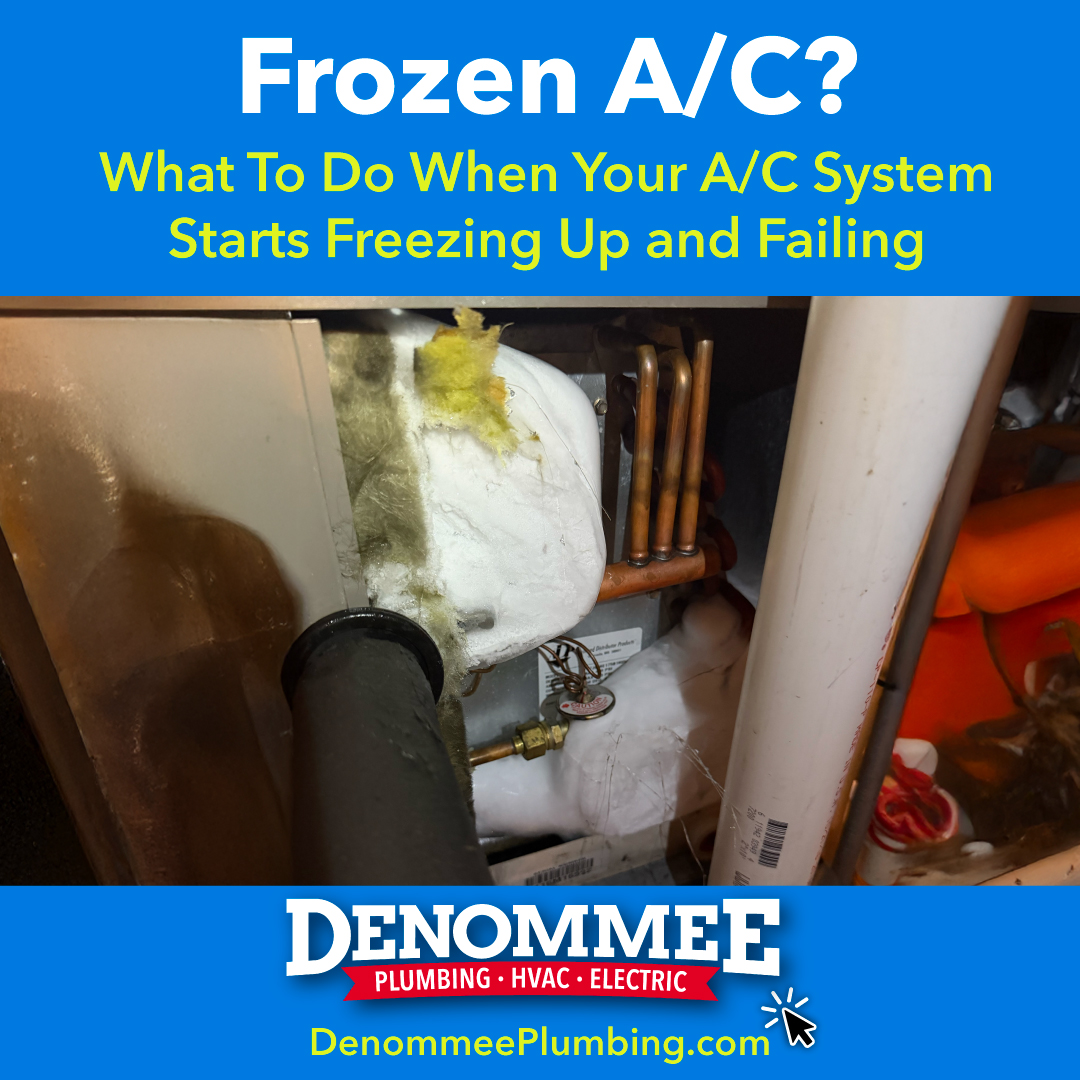
At Denommee Plumbing, HVAC & Electric, we frequently respond to service calls where a system has frozen and begun to fail. Here is what you should do first, and what to avoid, when it happens.
Signs Your A/C Is Freezing Up
Common warning signs include:
-
Little or no airflow from the vents.
-
Warm air coming from registers even though the thermostat is set to cool.
-
Ice buildup on refrigerant lines, the outdoor unit, or the indoor evaporator coil.
-
Water leaking around the air handler or furnace after ice begins to melt.
-
Unusual noises such as hissing, bubbling, or struggling airflow.
-
Rising indoor temperatures despite the A/C running continuously.
These symptoms often appear gradually before the system stops cooling altogether.
Step 1: Turn the System Off
The most important first step is to turn the cooling mode off. Continuing to run a frozen air conditioner can damage the compressor, which is one of the most expensive components to replace.
Set the thermostat from Cool to Off or Fan Only.
Why this matters
Running the fan without cooling helps circulate air and can begin thawing the ice safely.
Step 2: Let the Ice Melt Completely
Depending on how severe the freeze is, thawing may take 2 to 24 hours.
During this time:
-
Leave the fan running if possible.
-
Place towels around the indoor unit if water may drip during thawing.
-
Do not chip ice away with tools.
-
Do not use high heat, such as a heat gun or torch, to speed up melting.
Forcing ice off the coil can damage delicate fins and refrigerant tubing.
Step 3: Check the Air Filter

A clogged filter is one of the most common causes of a frozen coil. Restricted airflow prevents the evaporator coil from absorbing heat properly, causing temperatures to drop below freezing.
Remove the filter and inspect it:
-
If it is dirty, replace it.
-
Make sure the replacement filter is the correct size and airflow rating for the system.
-
Verify the airflow arrow points toward the equipment.
Many freeze-ups can be avoided with regular filter changes.
Step 4: Make Sure Vents and Returns Are Open
Walk through the home and check that:
-
Supply vents are not blocked by furniture, rugs, or boxes.
-
Return-air grilles are unobstructed.
-
Registers are fully open.
Closing too many vents can reduce airflow enough to contribute to freezing.
Step 5: Restart the System
After all visible ice has melted:
-
Install a clean filter.
-
Set the thermostat back to Cool.
-
Set the temperature a few degrees below room temperature.
-
Monitor operation for 15–30 minutes.
If the system cools normally and airflow is strong, the freeze may have been caused by restricted airflow.
When to Call a Professional
Contact an HVAC technician if:
-
The coil freezes again after thawing.
-
The system runs continuously but does not cool.
-
You hear refrigerant-related noises.
-
Ice forms repeatedly on the copper lines.
-
Water leakage continues.
-
The outdoor unit will not start.
-
Breakers trip or electrical issues are present.
Repeated freezing often indicates a deeper problem such as:
-
Low refrigerant charge from a leak.
-
Dirty evaporator coil restricting heat transfer.
-
Failing blower motor or capacitor.
-
Blocked condensate drainage.
-
Faulty thermostat or controls.
-
Undersized or damaged ductwork.
What Not to Do
Avoid these common mistakes:
-
Do not keep lowering the thermostat when the system is not cooling.
-
Do not run the A/C while ice is present.
-
Do not attempt refrigerant repairs yourself.
-
Do not ignore a recurring freeze-up — the problem will usually worsen.
Preventing Future Freeze-Ups
The best prevention is routine maintenance. Homeowners should:
-
Change air filters every 1–3 months.
-
Keep supply and return vents clear.
-
Schedule annual A/C maintenance.
-
Have refrigerant levels checked when performance declines.
-
Clean outdoor condenser coils and maintain proper clearance around the unit.
-
Address unusual noises or reduced airflow early.
A quick reminder
Annual maintenance is often the difference between a simple service visit and a costly midsummer breakdown.
The Bottom Line
If your A/C starts freezing and failing, turn it off, let it thaw, check the filter and airflow, and restart only after the ice has completely melted. These steps can help protect the equipment and may restore operation temporarily.
However, if the system freezes again, struggles to cool, or shows signs of refrigerant or electrical problems, professional service is the safest next step. A frozen air conditioner is usually a symptom of an underlying issue, and catching that issue early can prevent expensive repairs and uncomfortable downtime during the hottest days of summer.
Need help with a frozen A/C in Massachusetts or Southern New Hampshire? Denommee Plumbing, HVAC & Electric can diagnose the cause, restore cooling, and help prevent future freeze-ups with expert maintenance and repair services.


